
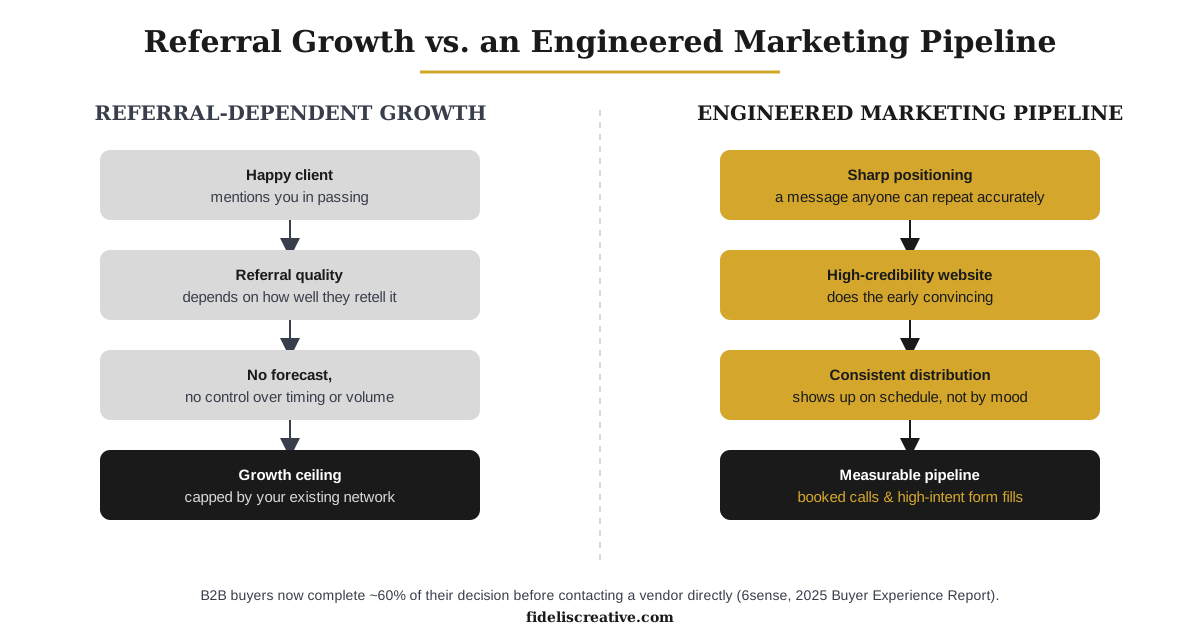
Referral-based growth stalls the moment a company outgrows the network that built it. Referrals are unpredictable; they’re hard to forecast month to month, and most importantly, today’s buyers are already 60% of the way through their decision before they ever call you. If your growth strategy sounds anything like, “our work speaks for itself,” you’re not in the conversations where your next contract is actually being decided.
This isn’t a knock on referrals. Far from it. Referrals are gold; they push you to the front of people’s mind and arrive with a built-in authenticator feature. Someone you know, like, trust has had a great experience with your company. Big advantage!
Referrals probably built your business. But there’s a difference between a reputation and a pipeline, and mid-market engineering and industrial service firms tend to discover that difference at the worst possible time: right when leadership is trying to grow past where relationships alone carried them.
The Referral Ceiling Is a Structural Problem, Not a Sales Problem
When growth relies on referrals, marketing sits on the sidelines. It exists to make the brand look decent while the real business development happens through relationships your leadership team has spent 15-20 years building. That works, but it doesn’t scale.
A few structural limits show up every time:
- You can’t forecast it. Referrals ebb and flow based on who happens to finish a project this month and how their conversation happened to go. That’s not a pipeline; it’s more like a weather pattern.
- It caps your market. Referrals mostly come from inside your existing network and industry. If that sector slows down, your lead flow slows down with it. That leaves you in an uncomfortable spot.
- It’s invisible until it’s a crisis. A Forbes Agency Council analysis on referral-dependent growth put it plainly: referrals are a byproduct of good work, not a strategy, and they rarely carry a business from one growth tier to the next one.
None of this means your sales team is underperforming. It means they’ve been asked to close deals without the air cover a real marketing engine is supposed to provide: positioning, visibility, and a website that does some of the selling before they ever pick up the phone.
What the Data Says About How Your Buyers Actually Decide
See what we’re up against? It’s even a little worse than that: even the buyers who do find you through a referral are doing far more independent research than they used to, and they’re doing it before they say a word to you. You’re getting vetted while they sit in their truck outside the sandwich shop or while their wife is in Target.
According to 6sense’s Buyer Experience Report, B2B buyers now complete roughly 60% of their purchasing decision before contacting a vendor directly, and a large majority already have a preferred vendor in mind by the time they reach out. A separate Gartner sales survey found that a majority of B2B buyers actually prefer to research and shortlist vendors on their own, without a sales rep involved at all, and that buyers frequently avoid vendors whose outreach feels irrelevant or premature.
Put these findings together and you realize that it’s a crazy cocktail of forces that eventually produce: your website, your case studies, and your public positioning are doing the pitching long before your sales team gets in the room. If a prospect, including one who was warmly referred to you, can’t find clear proof of what you do, who you do it for, and what it’s produced for others, they’re forming an opinion about you somewhere else. Often on a competitor’s site.
This is the gap referral-dependent firms don’t see; they just notice competitors start winning deals they never even knew were in play.
Three Signs Your Growth Has Outgrown Referrals
You’re probably past the referral stage if:
- Leadership can’t answer “where’s next quarter’s revenue coming from?” with anything more specific than “hopefully… some more calls come in.”
- Your sales team is explaining what your company does from scratch on every call — instead of confirming what a prospect already believes about you.
- Competitors with comparable (or weaker) technical capability are winning more visibility — showing up in searches, on LinkedIn, in industry conversations, simply by being louder and more consistent, not better.
If any of that sounds familiar, the fix isn’t a bigger referral ask or a nicer logo. It’s building the parts of the strategic system that are currently missing.
What a Marketing Engine Looks Like Instead
A real alternative to referral dependency isn’t “more marketing activity.” It’s a small number of connected pieces working together on purpose:
- Sharp positioning | A clear, specific answer to what you do and who it’s for, so a referral can be repeated accurately instead of watered down to “they’re a solid team.”
- A High-Credibility Website | Built to do the early convincing a self-directed buyer needs before they’ll pick up the phone.
- Consistent Distribution | Showing up on the platform your buyers actually use (for most industrial and engineering leadership audiences, that’s LinkedIn) on a predictable schedule, not in bursts of inspiration.
- Sales Collateral | The talk tracks, one-pagers, and proof points that make your team sharper, more consistent, and more cohesive, instead of reinventing the pitch every time.
This is, functionally, what we mean when we talk about running marketing like an operation rather than a series of disconnected projects. Begin with positioning, then a credible web presence, then consistent distribution, then sales enablement, all measured against actual pipeline outcomes rather than vanity metrics.
A Word of Caution: This Isn’t About Doing More
The instinct, once you see the gap, is to add activity, more posts, more content, more outreach. That’s usually the wrong move. Referral-dependent companies that try to bolt marketing tactics onto a business that was never built to run one tend to get noise, not pipeline. The fix is sequencing: get the positioning right first, build the credibility layer second, and only then turn on consistent distribution and enablement. Skipping straight to “more content” without positioning underneath it is exactly the kind of scattered activity that makes leadership teams distrust marketing in the first place.
FAQ
Why do referrals stop working as a company grows? Referrals don’t stop working entirely, but at some point, waiting on referrals will no longer be sufficient for growth. They’re dependent on the volume and timing of other people’s conversations, which means you can’t forecast or control them, and they naturally cap you within your existing network.
How much of the B2B buying process happens before a prospect contacts a vendor? Independent research from 6sense puts it at roughly 60% of the buying journey completed before first contact, with most buyers already holding a preferred vendor by that point.
What should replace a referral-only growth strategy? Not more outreach, but a sequenced system: clear positioning, a credible website, consistent distribution, and sales enablement collateral, all measured against pipeline outcomes rather than activity.
Is this only a problem for companies without a strong reputation? No, it’s often the opposite. Companies with the strongest reputations are the ones most likely to coast on referrals until growth stalls, because the work has always spoken for itself. The gap shows up right when leadership decides it’s time to grow past what relationships alone can produce.
If you’re seeing these signs in your own pipeline, we break down positioning, website credibility, and sales enablement in more depth in the next blog, or you can start a conversation with our team directly. You can also follow our take on building marketing that runs like an operation on LinkedIn and Instagram.
Do you need help
talking to your
perfect clients?